Riverside City College Makes Its Mark at NAMM 2026
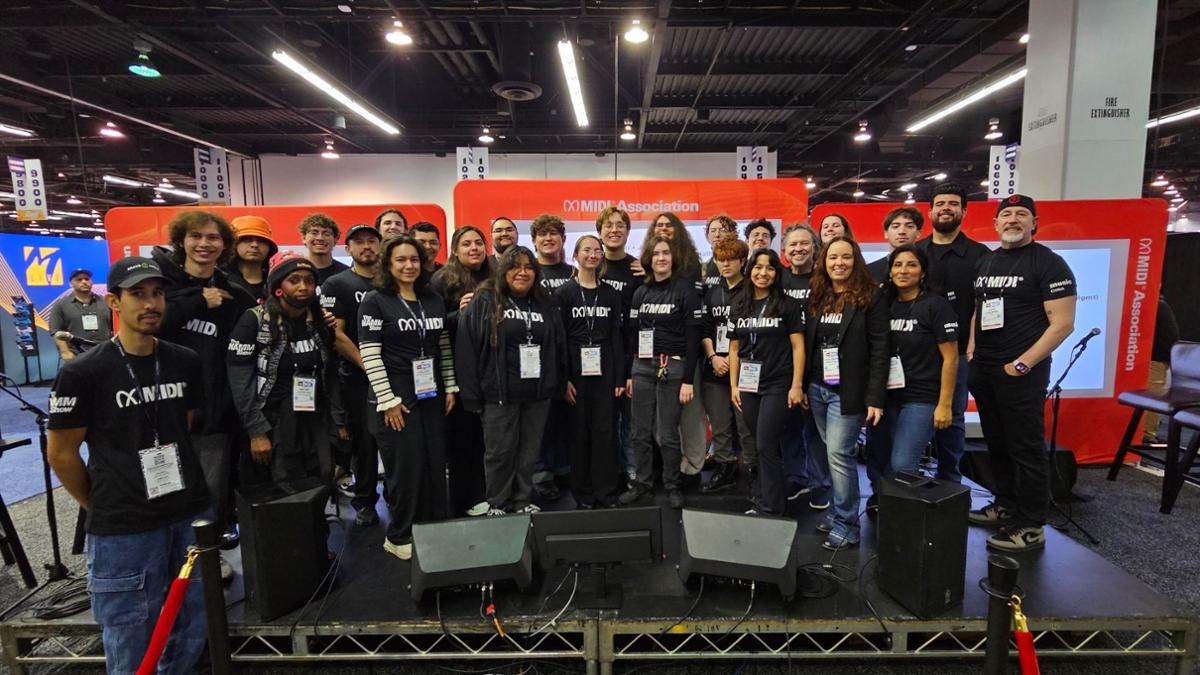
Riverside City College made a significant impact at the 2026 NAMM Show, with 52 students actively involved in one of the world’s largest music industry events. Rather than simply attending, students worked, performed, managed, and collaborated across multiple roles, gaining firsthand experience in what it means to participate in the music industry at a professional level. RCC students were the only college student group embedded at this level of exhibitor responsibility, working daily inside a major industry association booth with defined roles, schedules, and professional expectations.
Fifteen students traveled on ASRCC funding with the Music Industry Club and stayed in a hotel near the convention, while additional students supported the effort through paid setup and teardown positions, booth management roles, scheduled volunteer exhibitor shifts, and performances throughout the show. Students worked one-and-a-half to three-hour shifts each day, earning exhibitor badges that allowed them to engage with NAMM not as spectators, but as industry professionals. Between shifts, they toured the show floor, explored emerging technologies, attended educational sessions, and built connections with manufacturers, artists, and other industry professionals.
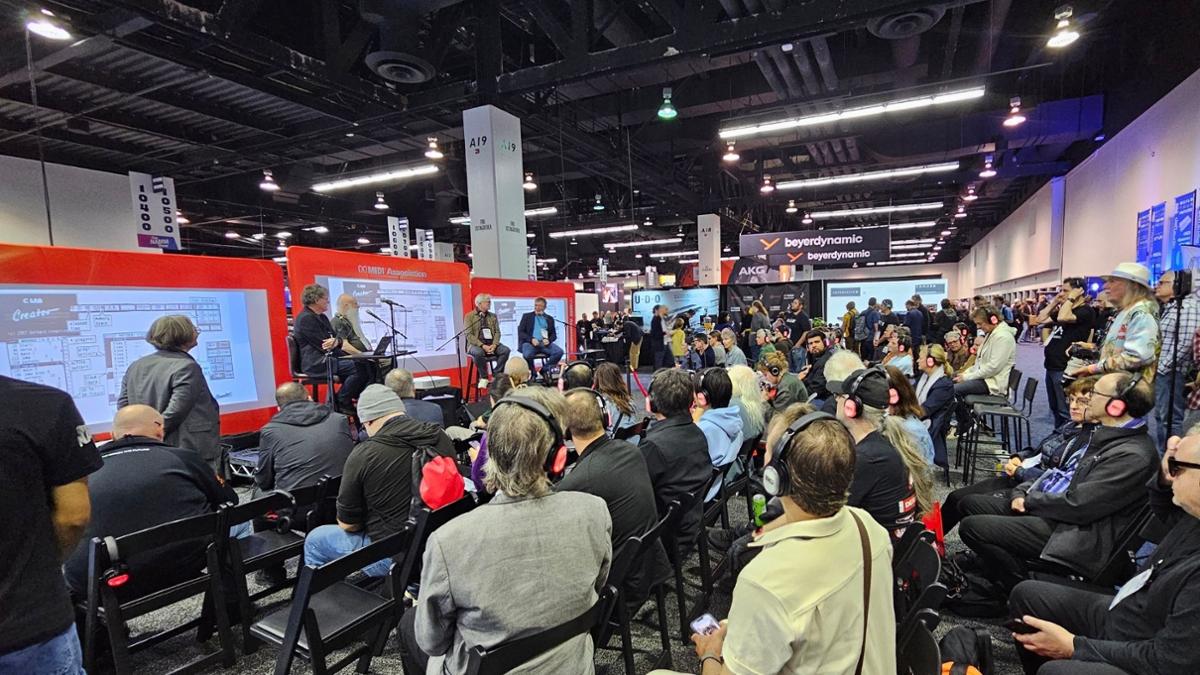
RCC’s entire presence at NAMM centered around its partnership with The MIDI Association, where students worked inside a large, high-profile booth located at the front of Hall A in the Anaheim Convention Center. The booth featured a full performance stage, live production area, and extensive hands-on displays showcasing current MIDI technology. Students assisted with two full walls of MIDI devices, supported live programming, and helped manage a packed schedule throughout the show, gaining valuable insight into the logistics, communication, and professionalism required at a major international industry exhibition.
Many students and staff arrived early on Wednesday, January 21, for booth setup. Work began around 10:00 a.m. and continued well into the evening, with official ASRCC-traveling students joining later in the afternoon to assist with final preparations. The day provided a behind-the-scenes look at the physical labor, coordination, and teamwork required before the show floor ever opens, reinforcing the scale and professionalism of the operation students were supporting.
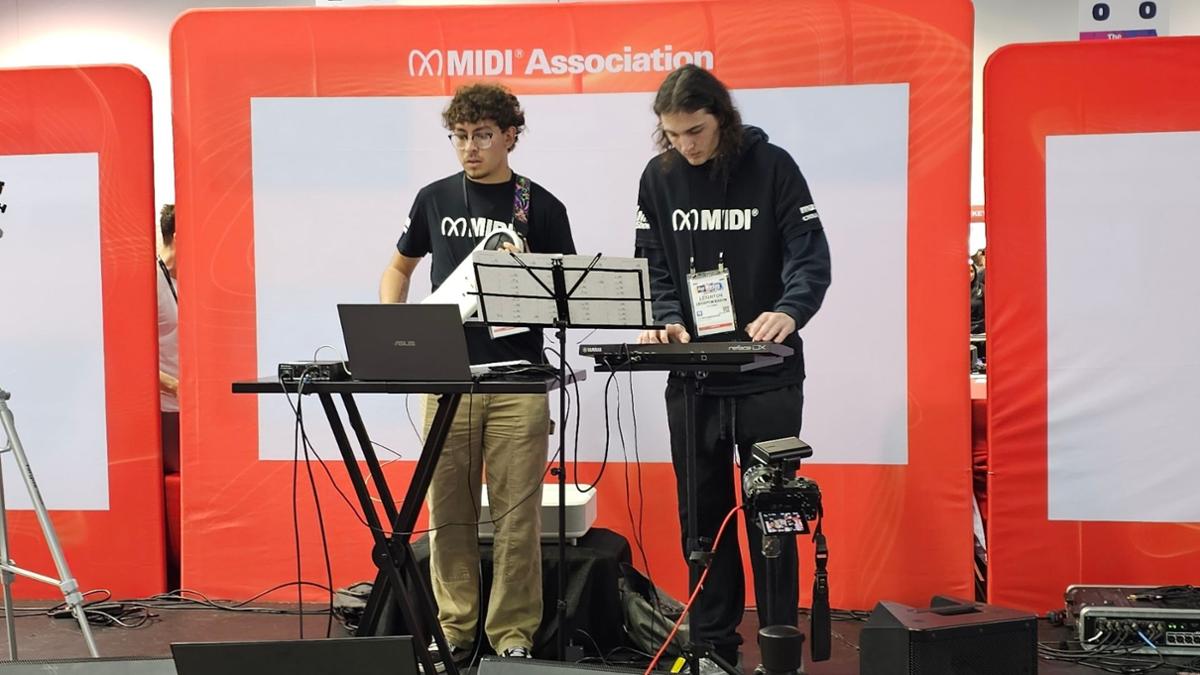
Live performance was a central component of RCC’s presence at NAMM 2026, offering students the opportunity to work directly with manufacturers while showcasing emerging instruments and technologies on a professional stage. These performances were not last-minute demonstrations, but the result of months of preparation and relationship-building between students, Professor Jennifer Amaya, and MIDI Association partners.
Jett Andrade and Leighton Eason performed a duet using the Arcana Strum and a Yamaha Reface DX Mini, blending expressive musicianship with modern MIDI-based instruments. Angel Barral worked for months leading up to the show with a brand-new product, the DogPaw, collaborating closely with manufacturer Bill Bartke-Croughan to prepare the instrument for its public debut.
Mel Batz performed a cello solo using GeoShred software on an iPad, developed through close collaboration with software creator Pat Scandalis. Uriah Chavez also performed on GeoShred, while his sister, Leiana Chavez, ran a brand-new accompaniment-style software called Caedence, with guidance from product developer Jeff Bernett.
Additional performances highlighted innovative and unconventional instruments. Leiana Chavez performed on Playtime Engineering’s MyTracks, while Grace Kyte performed on the company’s After Dark instrument. Both are best described as sophisticated, toy-inspired instruments that combine playful design with serious musical capability. The manufacturers were so impressed by the students’ performances that both were offered complimentary instruments in recognition of their musicianship and professionalism. Miguel Cruz worked privately with Groove Synthesis to bring one of the company’s flagship synthesizers to life on stage, translating complex sound design and improvisation into an engaging live performance.
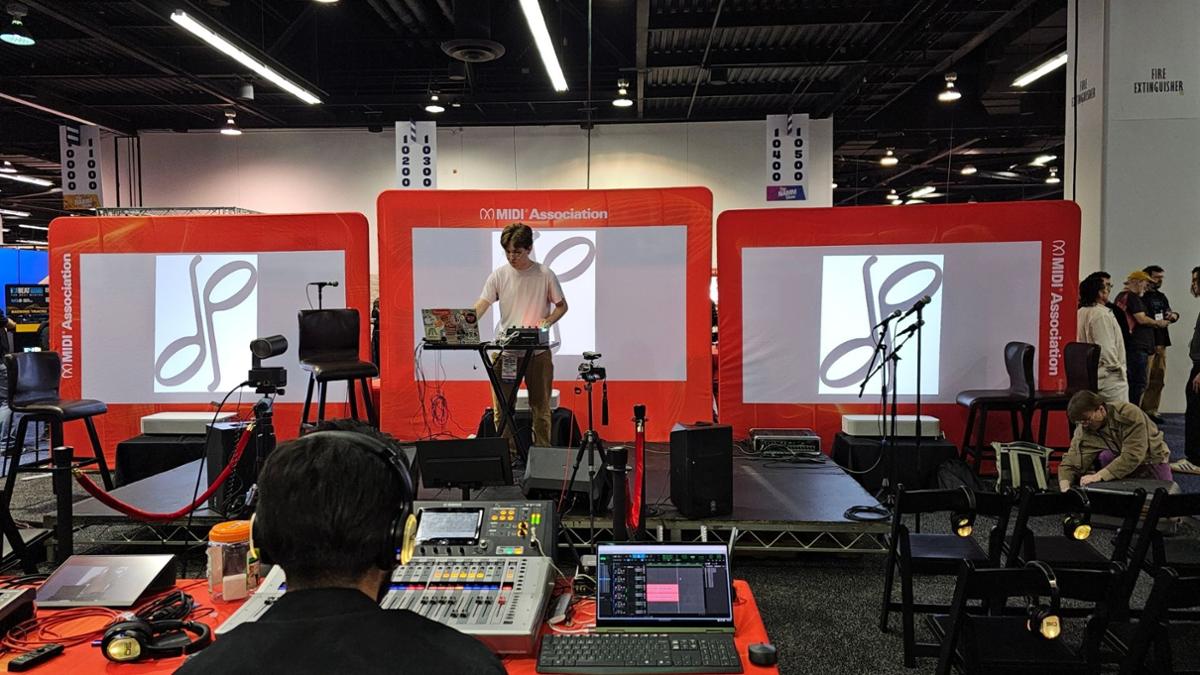
Jose Encinas tackled a brand-new software technology, Connect Through MIDI, using Ableton Live and a collection of unconventional MIDI controllers in a live, improvisatory performance with fellow student Darren Sewell and audience participants, turning the demonstration into an interactive exploration of music creation. Student Asher Khon performed a solo on Robkoo’s Clarii Mini, a digital clarinet-style instrument, while Maria Marcelo performed on Robkoo’s R1, a related expressive wind controller, with accompaniment provided by Harley Glenn on the Arcana Strum.
These performances reflected not only technical skill, but trust. Manufacturers entrusted students with unfinished products, flagship instruments, and live demonstrations in front of international audiences, underscoring the credibility RCC students brought to the NAMM Show.
Student reflections underscored the impact of the experience. Daniel Lara described NAMM as “an amazing and eye-opening experience,” noting how inspiring it was to see the many different facets of the industry, from lighting to emerging MIDI technologies. First-time attendee James Burton shared that he left the show “inspired, motivated, and more equipped to create new music,” citing both the technical learning and networking opportunities as transformational. Anthony Silvas reflected that even limited time at the show was life-changing, calling NAMM “an enthralling injection of inspiration” that reminded him why he chose to pursue music in the first place.
Throughout the week, alumni and industry-connected faculty played an important role in mentoring students. RCC alumnus Gustavo Garza, now a full-time audio engineer at Yaamava’ Resort & Casino, returned to run audio for the MIDI booth, sharing responsibilities with RCC adjunct faculty member and Disneyland sound engineer Melissa Feild. Their involvement reinforced the continuity between RCC’s academic programs and professional pathways, offering students guidance rooted firmly in real-world experience.
For students traveling on ASRCC support, one of the highlights after long, demanding days on the show floor was the opportunity to regroup as a cohort during informal group dinners. A major highlight also came on Friday night, when the Music Industry Club hosted its ever-growing annual NAMM pizza night at Shakey's Pizza. Approximately 40 to 50 RCC students attended the event, which was fully funded through Music Industry Club’s exceptional fundraising efforts. The evening reflected student leadership, planning, and financial stewardship, and reinforced the strong sense of community cultivated by MIC throughout the year.
A visible symbol of that shared identity throughout the week was the custom, NAMM-only MIDI Association T-shirts designed and printed one-by-one by Alex Amaya. Beyond their striking design, the shirts served as a point of pride for students — a tangible marker of belonging to a team whose presence at NAMM was earned through preparation, effort, and professionalism.
This level of student access was made possible through sustained relationship-building and long-term planning led by RCC Audio & Music Technology Professor Jennifer Amaya, whose reputation and consistent work over many years have established deep trust with industry partners, enabling large-scale experiential learning opportunities for RCC students. In the weeks leading up to NAMM, preparation intensifies into near round-the-clock coordination, ensuring students are trained, scheduled, and prepared to operate within a professional exhibitor environment. During the show itself, Professor Amaya remains on site, overseeing students, supporting industry partners, assisting with MIDI Association booth operations, and troubleshooting in real time. In a pre-show meeting with RCC students, former MIDI Association Executive Director and current Board Member Athan Billias remarked, “She is the hardest-working person at the NAMM Show, without a doubt.”
NAMM 2026 required months of planning, long days on the show floor, and constant coordination across students, alumni, faculty, and industry partners. The result was an experience that provided students with confidence, clarity, and a tangible sense of belonging within the music industry. As the booth was packed up and the convention lights dimmed, the conclusion of the show marked not just the end of an event, but the successful execution of a high-impact experiential learning opportunity aligned with RCC’s strategic goals for student engagement, workforce preparation, and industry partnership.
If you or someone you know is interested in studying audio and music technology at Riverside City College, please reach out to Professor Jennifer Amaya at jennifer.amaya@rcc.edu for more information.
